
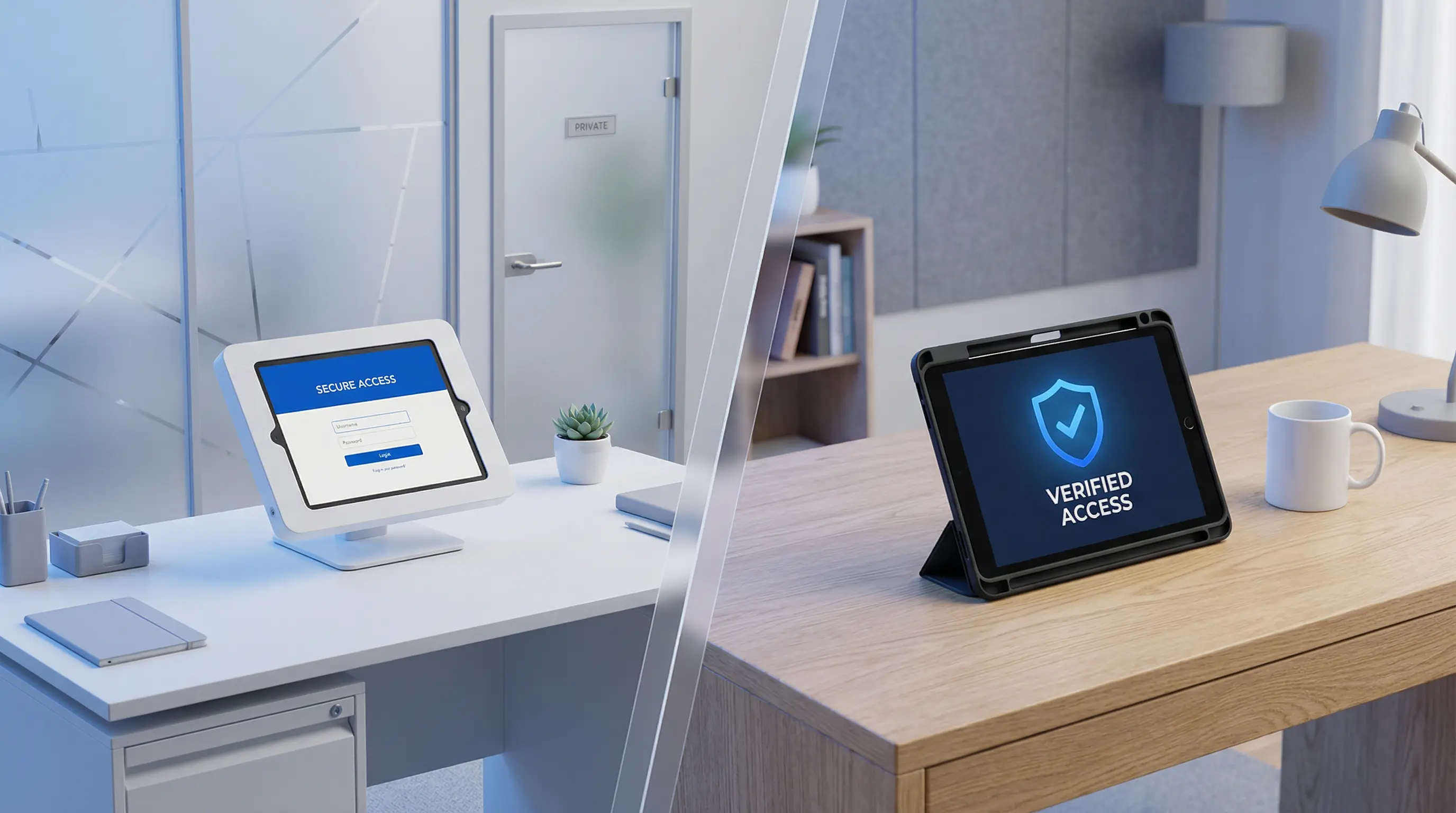
Every year, authentication failures cost people and businesses both personally and financially. A shift towards more resilient phishing-proof authentication protocols must occur for their protection.
Trust Swiftly’s IAL3 Supervised Remote Identity Proofing solution meets NIST SP 800-63-4 standards by employing continuous verification, hardware authenticators and federation to meet its requirements. This solution eliminates vulnerabilities like photoshops and deepfakes while protecting ITAR-controlled technology against fraudsters.
NIST IAL3 Verification
NIST (National Institute of Standards and Technology) sets standards in many business, science, and technology domains where having an official yardstick can be beneficial – from plumbing pressure-loss measurements to viscosity of chemical elements. With regard to cybersecurity and identity management, their Special Publication 800-63 provides levels of assurance for various forms of authentication/verification procedures.
Identity Assurance Levels (IAL) from NIST measure the degree to which an asserted identity matches up with its actual counterpart in real life; levels range from self-asserted (IAL1) to remote supervision (IAL3). NIST also establishes Authentication Assurance Levels (AAL) and Federation Authentication Levels (FAL), which measure how strong assertions sent between identity management systems are.
Trustswiftly’s IAL3 verification process goes beyond traditional practices by using biometric, behavioral, device, and contextual data to accurately validate identities of individuals. Biometrics in particular is more difficult forger than photographs or pieces of paper making them ideal IAL3 identity proofing techniques.
Trust Swiftly’s FedRAMP High compliance-aligned IAL3 remote identity proofing solution offers organizations an inexpensive and speedy alternative. Organizations can utilize it instantly neutralize any vulnerable remote IT workers while securely permitting them to work from home.
NIST IAL3 Compliance
Organizations dealing with highly regulated information, such as federal contractors handling ITAR data or personnel accessing critical infrastructure or law enforcement systems, require more robust verification methods. NIST IAL3 requirements implemented via Trustswiftly’s hardware-anchored remote verification platform help eliminate proxy networks, expose synthetic deepfakes and ensure real people on-site that have full control of their identities; all while protecting against advanced fraud threats that would otherwise compromise an enterprise’s security posture.
NIST 800-63-4, released as its final version in 2025, marked a significant strategic shift away from checklist-based requirements to risk-based Digital Identity Risk Management (DIRM) framework that prioritized strong authentication mechanisms that protect against specific and sophisticated fraud attacks. While maintaining core identity assurance levels (IAL), AAL, and FAL as their core identity verification levels (IAL), MFA, passkeys with antiphishing protection for AAL authentication as well as strong federation practices, watchlist screening, and modern identity proofing methods (IAL), etc.).
Trustswiftly’s Zero Trust model meets these stringent requirements by continuously assessing user and device posture through adaptive verification techniques that adapt to context-aware verification, using high assurance hardware authenticators, MFA, federation, federated authentication and other secure methods to create an environment which safeguards against impersonation and fraud while meeting user experience expectations. If you would like more information on how our platform can meet IAL3 specifications contact us immediately!
NIST IAL3 Identity Proofing
Failures in authentication cost individuals and businesses millions each year, putting sensitive data at risk. To protect online services against impersonation and fraud, NIST ial3 identity verification software standards aim to verify user claimed identities via rigorous identity proofing, validation, and identification procedures conducted by credential service providers (CSPs).
NIST IAL3 mandates on-site attended interaction with a CSP-controlled kiosk or device and biometric comparison, an upgrade over current requirements which require only automated comparison of facial images provided by applicants with those on evidence supplied by CSPs.
The new requirements also deprecate email OTP, significantly reduce SMS-based authentication, and incorporate Passkeys, further solidifying FIDO2 as the gold standard of high assurance passwordless authentication. These major changes reflect reality: modern threats such as state-sponsored attacks cannot be defeated with minor updates to software-based authentication workflows.
Trustswiftly’s zero trust solution addresses these challenges with an intuitive user experience compliant with NIST 800-63-4 IAL3 requirements. We combine an identity verification and enrollment process with hardware-anchored, federation-enabled high assurance hardware authenticators, biometrics, and biometric authentication technology to offer comprehensive protection from even the most sophisticated cyberattacks. Our platform brings modern usability with dynamic security measures that assess device posture and threat intelligence to create the optimal combination of speed, scalability and security.
FedRAMP High Identity Proofing
With the proliferation of deepfakes and phishing-enabled hardware tokens, traditional identity verification no longer provides adequate protection from sophisticated threats. NIST 800-63-4 requires that authentication processes adhere to stringent nist 800-63-4 ial3 compliance standards – something Trustswiftly is uniquely qualified to assist with.
With our Trustswiftlysolution, you can conduct remote nist ial3 verification via chat, video, facial recognition with liveness detection and document authentication. Furthermore, this solution supports step-up reproofing based on risk to provide continuous identity assurance beyond one point in time – decreasing attack surface and making your system more secure against attacks.
NIST SP 800-63-4 requires three levels of proofing: IAL3, which involves direct human agent interaction or remote session supervision, along with physical, hard-to-spoof methods like YubiKey security tokens and stringent chain of custody processes. Select a solution with all these capabilities combined into an easily manageable remote-first model to ensure that your organization meets fedramp high identity proofing and achieves an appropriate security posture. Trustswiftly’s patented technology makes meeting these requirements simpler, cheaper and faster than ever – mitigating threats such as man-in-the-middle phishing attacks, credential harvesting attacks and MFA fatigue attacks while simultaneously decreasing cyber liability premiums and operational costs through reduced password resets.